The Tisroc
The Horse and His BoyThe Tisroc is the ruler of Calormen, a father who treats Rabadash’s ambitions as both a possible instrument of conquest and a threat to his own throne. In his private council, he refuses a direct war against Narnia but approves a covert invasion of Archenland, making calculated deniability—not restraint from territorial ambition—the defining feature of his policy. His final explanation exposes the personal calculation beneath his public prudence: he has eighteen other sons, and Rabadash’s expedition may remove a dangerous heir from the court.
Identity and Political Position
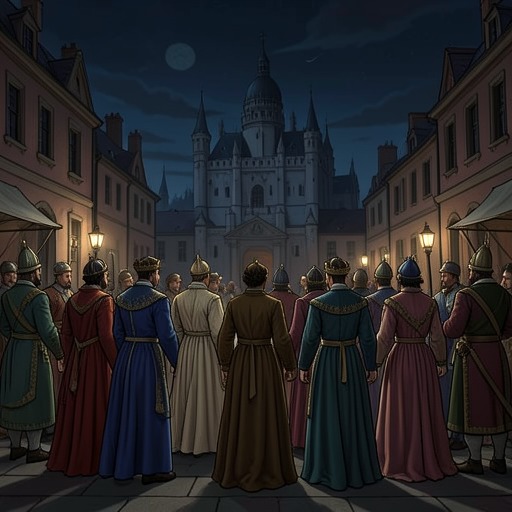
The Tisroc presides over Calormen and speaks from a position of unquestioned authority in the council attended by Rabadash and the Grand Vizier, Ahoshta Tarkaan. His formal style of address and the deference expected by those around him frame the court as a hierarchy in which even family disagreements are expressed through ceremony. Rabadash calls him father, yet the Tisroc’s responses show that kinship does not displace the interests of the throne.
His ambitions reach beyond Calormen. He describes Narnia’s continued freedom as a source of discontent and is receptive when Rabadash proposes a means of taking Archenland that might open the way to Narnia. But the Tisroc distinguishes between wanting expansion and accepting the consequences of open war. That distinction governs the entire decision: he will permit an attack so long as he can deny that the state sanctioned it.
Rabadash’s Proposal and the Limits of War
Rabadash enters the council furious that Queen Susan has departed. He blames his father for delaying pursuit and insists that he must have Susan; his frustration turns into a proposal to invade Narnia, destroy its power, and take her as his wife. The Tisroc rejects the appeal for open war. His refusal is explicit: Rabadash’s words will not move him to begin one.
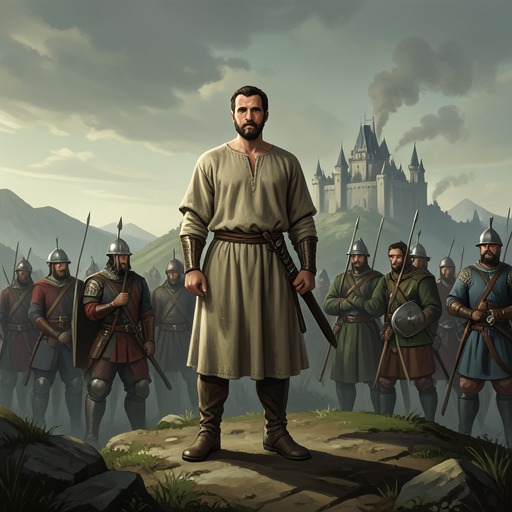
The refusal does not arise from sympathy for Narnia or from opposition to conquest. The Tisroc later acknowledges that he finds Narnia’s continued independence troubling. What he will not accept is a war declared in his own name, with its risks plainly attached to his rule. Rabadash’s next proposal supplies a way around that limit: he will leave with only two hundred horsemen, cross the desert, surprise King Lune’s castle of Anvard in Archenland, and then ride through the pass toward Narnia. He presents the plan as a rapid seizure that could be disavowed if it fails.
Ahoshta judges that Anvard may fall and that such a success would place Narnia in a vulnerable position. After a long silence, the Tisroc authorizes the expedition. He tells Rabadash to expect no assistance and no rescue if he is killed or captured. If the prince’s conduct causes open war through unnecessary bloodshed among Narnia’s nobles, the Tisroc will withdraw his favor and give Rabadash’s place in Calormen to his next brother. The authorization is therefore conditional: Rabadash may pursue conquest, but must bear its immediate dangers and keep its consequences within bounds.
Fatherhood as Calculation
The Tisroc’s manner combines measured counsel with threats. When Rabadash insults him as a coward, the Tisroc answers that, were Rabadash not his son, the prince’s life would be short and his death slow. The controlled delivery of the threat unsettles Aravis, who is concealed nearby with Lasaraleen and overhears the council. The exchange makes clear that the title of son protects Rabadash, but only within limits set by the ruler.
After Rabadash leaves, the Tisroc asks whether anyone else knows what has been decided. He then explains why he is willing to send his firstborn on a mission likely to end in death: if it succeeds, Calormen may gain Archenland and perhaps later Narnia; if it fails, he still has eighteen sons. Rabadash, as eldest, has begun to become dangerous. The expedition thus serves two purposes at once—an attempt at expansion and a way to remove a potentially troublesome successor from the political center without openly ordering his death.
Secrecy and Courtly Performance
The council’s careful language does not soften its calculations; it disguises them. Rabadash and the Tisroc address each other with elaborate honorifics even while arguing over war, succession, and the prince’s survival. Ahoshta likewise praises the ruler’s prudence, then falls silent when Rabadash’s impatient movement warns him that his contribution has become unwelcome. Ceremony is the court’s surface, but power determines when speech is permitted and whose interests it serves.
The Tisroc’s final instructions sharpen the gap between public appearance and private intent. Rabadash must go quickly and secretly, while the ruler will neither acknowledge the mission nor help him if it fails. Once the prince has departed, the Tisroc remains alone with Ahoshta and asks whether the meeting is known to any living person. The question confirms that secrecy is not an incidental precaution; it is the mechanism that lets the ruler pursue gains while keeping the state’s official responsibility at a distance.
Narrative Role and Characterization
The Tisroc’s scene complicates the idea that Rabadash alone drives the planned invasion. The prince supplies the immediate grievance and the military scheme, but the ruler’s approval turns that private desire into an authorized expedition. At the same time, the Tisroc is not simply a compliant father backing his son: he has already refused a declared war, sets strict limits on the prince’s conduct, and protects himself against both failure and political fallout.
His composure contrasts with Rabadash’s anger. Where the prince speaks from frustrated desire, the Tisroc measures conquest against risk, succession, and the possibility of disavowal. His final remarks recast apparent paternal sacrifice as dynastic self-interest: Rabadash is allowed to pursue a throne-expanding venture partly because the venture may benefit Calormen, and partly because his absence may make the Tisroc safer. The result is a portrait of sovereignty practiced as calculation, with family affection and imperial policy both subordinated to the survival and strength of the throne.